Projects / In development

Castus Alpha

Work in progress

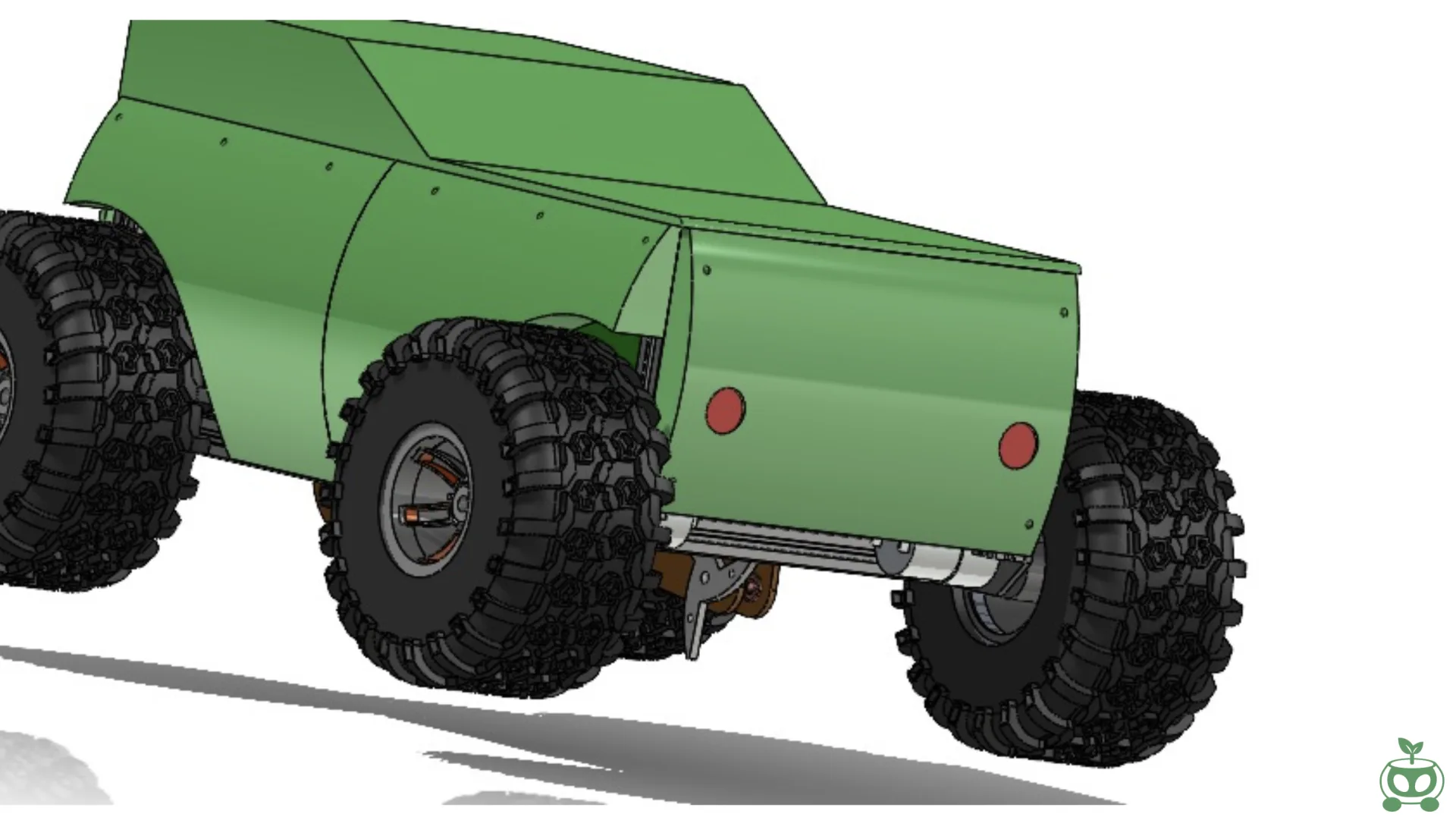
Castus Alpha, our second prototype, is currently in development and the focus of our technical work in 2027. Building on everything we learned from Mini Castus, we are designing it to be reliable, deployable on real beaches, and the platform for testing every future improvement in autonomous behavior.

Mini Castus

Why it matters

Beach Cleaning That Scales

Most beach cleaning today is done by hand or by large tractor-pulled machines that sieve the sand. Hand-picking doesn't scale, and the machines disturb the beach and handle scattered litter poorly. A robot that picks up individual items addresses both problems, and the litter data it collects can help beach managers find where pollution comes from and prevent it.

  • reBot Arm B601-DM
  • NVIDIA Isaac Sim
  • NVIDIA Jetson Orin
  • ROS 2
  • Nav2
  • nvblox
  • YOLO
  • ZED stereo camera
  • RTK GNSS
  • LeRobot

The prototype

What We're Building

Design Goals

  • Reliability: long operation and endurance across different risks
  • Deployability: works in real beach conditions and meets the needs of the user under supervision
  • AI testing platform: uses the beach as a testbed for all future improvements in autonomous behavior
What It Will Do

  • Detect litter while driving, segment each item and build a 3D model of its shape to plan the grasp
  • Run a fully autonomous loop: plan a path across the beach, stop at litter, pick it up, check the result and handle failures
  • Learn difficult picks from demonstrations recorded with a leader arm, using imitation learning (ACT, SmolVLA)
  • Operator app to start and monitor missions, with statistics and maps of the litter collected

How We Build It

  • Simulation first: everything is built and tested in NVIDIA Isaac Sim before it touches hardware
  • Building on research: we benchmark against published outdoor litter-grasping results instead of starting from scratch
  • Learning from every attempt: each pick is logged and used to retrain the system
  • Fully on board: all AI runs on the robot itself, with no internet connection needed

Software

How It Thinks

We are designing Castus Alpha's software around one rule: safety comes first. Many times a second, the robot checks that it is safe to move, then works through its priorities in order and does the most urgent one.

  1. AlwaysStay Safe

    Seven checks guard every move: the emergency stop, the link to the operator, the geofence, being stuck, a critical battery, the cameras, and any unresolved fault. If one fails, the robot stops on the spot and stays stopped until a person has looked.

  2. Priority 1Recharge

    When the battery runs low, it drives back to its home station and waits there until it is charged.

  3. Priority 2Empty the Bin

    When its storage is full, it heads home to be emptied.

  4. Priority 3Find Litter

    Otherwise it patrols the beach. An item must be detected several times before the robot believes it and goes to pick it up.

  • Seeing Litter

    A YOLO model finds litter in the stereo camera's images, and the camera's depth turns each detection into a position on the beach.

  • Knowing Where It Is

    Visual-inertial odometry from the ZED camera is fused with RTK GNSS, because wheel odometry cannot be trusted on slipping sand.

  • Mapping Obstacles

    NVIDIA nvblox builds a 3D map from camera depth, and Nav2 plans a path around everything in it, with a lidar and ultrasonic sensors watching up close.

  • Staying Out of the Sea

    A model trained on beach images tells water, wet sand and dry sand apart. It is deliberately cautious: mistaking sand for water costs a little coverage, but mistaking water for sand could drive the robot into the sea.

We develop and test this software on a virtual beach in NVIDIA Isaac Sim before it runs on hardware, and check it against camera, lidar and GNSS data recorded on real beaches.

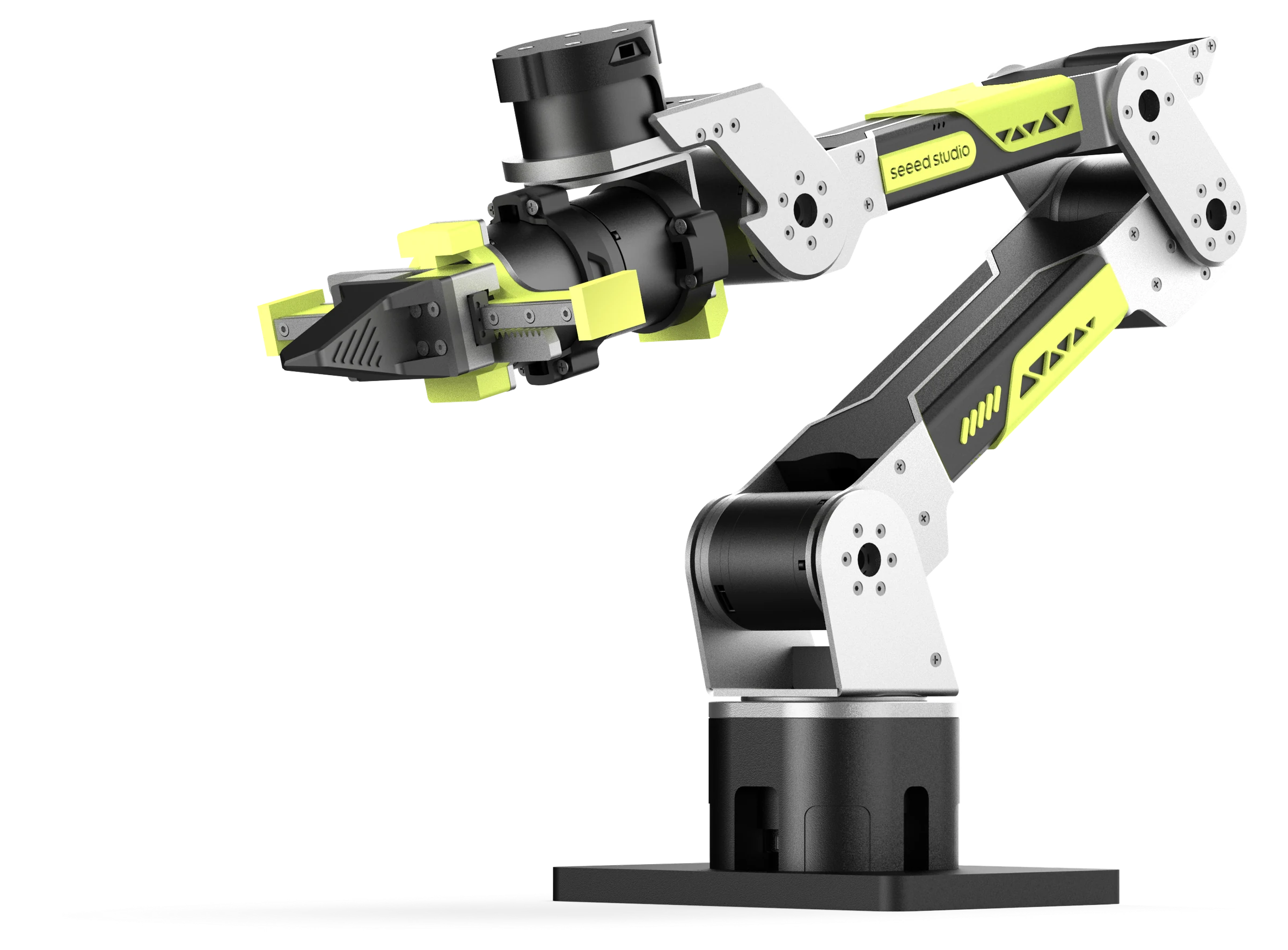
reBot Arm B601-DM robotic arm with gripper

Collection system

The Arm

Castus Alpha picks up litter with the reBot Arm B601-DM by Seeed Studio, a fully open-source 6+1 degree-of-freedom arm with a gripper. It works directly with LeRobot and NVIDIA Isaac Sim, the tools our simulation-first and imitation-learning workflow is built on. Paired with a Star Arm 102 leader arm, it lets team members demonstrate difficult picks for the robot to learn from.

reBot Arm B601-DM Render: Seeed Studio

Degrees of freedom
6+1
Six joints plus gripper
Reach
767 mm
Including the gripper
Payload
1.5 kg
Without the gripper
Repeatability
0.2 mm
Returns to the same pose

Roadmap

2027 Milestones

  1. Q1 2027

    Subsystem Rigs

    Final design verification for the movement, collection, energy and wireless subsystems, followed by building and testing each one on its own rig. In parallel, the robotic arm learns its first picks on a lab test rig.

  2. Q2 2027

    Litter Sorting Rig

    The robotic arm, mounted on a stationary rig, collects litter and sorts it into separate bins using the full sensor fusion and decision-making software, powered by an energy system that responds to faults and emergency stops.

  3. Q2 2027

    Environment Traversal

    A first chassis with powertrain and steering crosses a beach-like environment while being localized from a fixed base station. These tests tell us how much environmental protection the final robot needs.

  4. Q3 2027

    Chassis & Architecture Design

    With the subsystems proven, we design the custom chassis, body and electrical power and data network that bring them together.

  5. Q4 2027

    Castus Alpha Deployment

    Everything is integrated into an environmentally protected chassis and prepared for manual and autonomous field testing, followed by a public demo day.

Follow our progress as Castus Alpha comes together.

@teamgaia.nl